
How Does a Water Cooled Scroll Chiller Work?
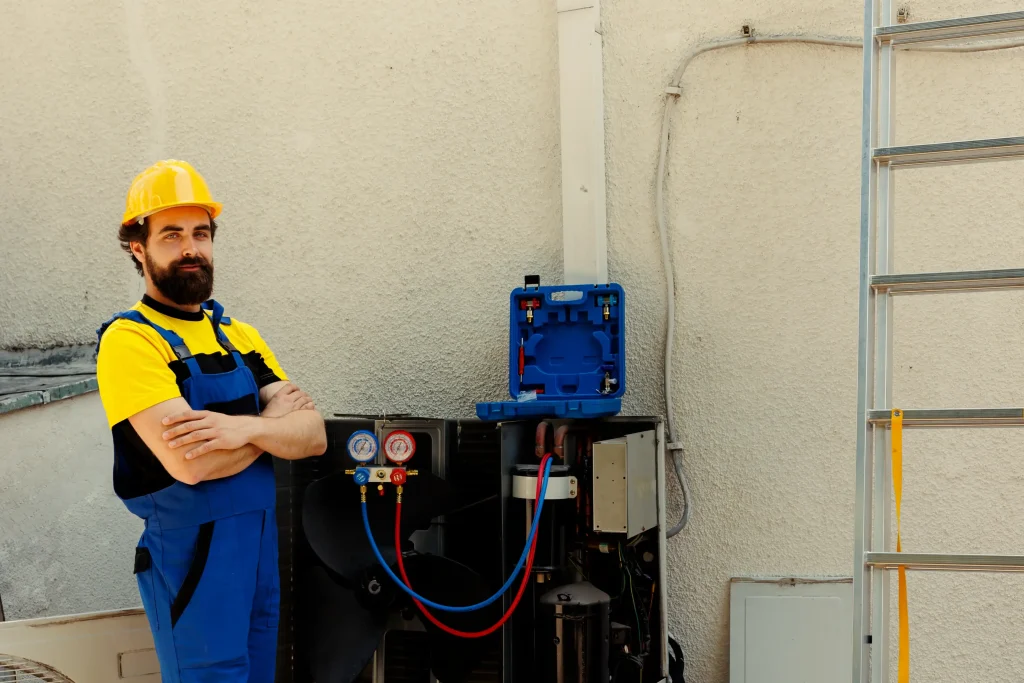
Cooling is an important part of many industrial processes. Machines, production lines, and equipment generate heat during operation. If this heat is not removed, it can affect product quality and equipment performance.
A water cooled scroll chiller helps control this heat by using water to remove heat from the refrigerant. It is used in industries that need steady process or comfort cooling.
Many people ask, how does a water cooled scroll chiller work? The answer starts with its refrigeration cycle. The system uses scroll compressors, an evaporator, a condenser, and an expansion device to move heat from one place to another.
Unlike an air-cooled system, the condenser in this setup uses water to reject heat. This makes the system useful for applications where stable cooling and efficient heat removal are important.
What Is a Water Cooled Scroll Chiller?
A water cooled scroll chiller is a refrigeration unit that uses scroll compressors and water-cooled condensers to produce chilled water.
The chilled water is then circulated to the required application. It may cool machinery, process equipment, or building spaces.
The main components include:
- Scroll compressor
- Water-cooled condenser
- Expansion valve
- Evaporator
- Chilled water pump
- Condenser water circuit
- Control system
The scroll compressor is central to the system. It uses two spiral-shaped scrolls to compress refrigerant smoothly.
RefCon Chillers’s scroll chiller range includes water-cooled configurations for industrial and commercial applications. Their systems are available in different capacities and compressor arrangements to suit varying cooling requirements.
How The Refrigeration Cycle Removes Heat
The water cooled scroll chiller working principle is based on the standard vapour-compression refrigeration cycle.
The process takes place in four main stages:
1. Compression
The refrigerant enters the scroll compressor as a low-pressure gas. The moving scroll compresses it into a high-pressure, high-temperature gas.
2. Condensation
The hot refrigerant moves into the water-cooled condenser. Cooling water flows through the condenser and absorbs heat from the refrigerant.
The refrigerant then changes from a hot gas into a liquid.
3. Expansion
The liquid refrigerant passes through the expansion valve. Its pressure drops sharply.
This also reduces its temperature.
4. Evaporation
The cold refrigerant enters the evaporator. It absorbs heat from the water that needs to be cooled.
The chilled water can then be sent back to the process or building.
This cycle continues while the chiller is running.
Understanding The Condenser Water Circuit
A major difference between air-cooled and water-cooled systems is how heat leaves the condenser.
The working principle of water cooled scroll chiller systems depend on a separate condenser water circuit.
The basic flow is:
Chiller condenser → condenser water → cooling tower → cooled water → condenser
The condenser water absorbs heat from the refrigerant. It then travels to a cooling tower, where the heat is released into the atmosphere.
The cooled water returns to the condenser. The process repeats.
This arrangement allows the system to reject heat without relying directly on outdoor air.
How The Scroll Compressor Supports Cooling
Understanding how water cooled scroll chiller works also requires a closer look at the compressor.
A scroll compressor contains two spiral elements. One remains fixed while the other moves in an orbiting motion.
This movement traps the refrigerant and pushes it towards the centre. The space becomes smaller as the refrigerant moves inward. This compresses the refrigerant before it enters the condenser.
The design has relatively few moving parts. This supports smooth operation and can help reduce vibration and mechanical wear.
A water cooled scroll chiller can also use multiple compressors. This helps the system adjust its capacity when cooling demand changes.
What Happens During Normal Operation?
The water cooled scroll chiller operation begins when the system receives a cooling demand.
The controller checks the required temperature. The compressor or compressors then operate according to the load.
During normal water cooled scroll chiller operation, several processes happen at the same time:
- Refrigerant circulates through the refrigeration circuit
- Chilled water moves through the evaporator
- Condenser water carries heat away
- Controls monitor temperatures and pressure
- Compressors adjust according to cooling demand
This coordinated operation helps maintain a stable chilled water temperature.
Why Water Cooling Can Be Useful
Water-cooled systems can offer practical benefits for suitable installations.
Some key advantages include:
- Effective heat rejection
- Stable cooling performance
- Suitable for continuous operation
- Compact equipment footprint in some installations
- Good efficiency under suitable operating conditions
- Multiple compressor configurations for load control
A water cooled scroll chiller can be useful where a suitable water supply and condenser water system are available.
However, the installation also needs proper water treatment. Poor water quality can cause scale and corrosion inside the condenser.
Where These Chillers Are Used
The water cooled scroll chiller is suitable for many commercial and industrial applications.
Common examples include:
- Plastic processing
- Rubber processing
- Food and beverage plants
- Pharmaceutical facilities
- Chemical industries
- Data centres
- Manufacturing units
- HVAC systems
The actual chiller selection depends on cooling capacity, operating temperature, process requirements, and available utilities.
For larger industrial cooling requirements, a screw chiller may also be considered. Screw systems are generally suited to higher cooling loads and continuous heavy-duty applications.
Water Cooled Vs Air Cooled Cooling
The choice between water and air cooling depends on the installation.
| Factor | Water-Cooled Scroll Chiller | Air-Cooled Chiller |
| Heat rejection | Uses condenser water | Uses ambient air |
| Water requirement | Required | Not required for condenser cooling |
| Cooling tower | Usually required | Not required |
| Installation | Needs water circuit | Simpler water-side setup |
| Suitable use | Controlled industrial settings | Sites with limited water access |
A water cooled scroll chiller can be a suitable choice where water infrastructure is already available.
Air-cooled systems can be more practical where water availability or cooling tower installation is a concern.
How To Maintain Reliable Operation
Proper maintenance is important for long-term performance.
The following checks should be part of a planned maintenance routine:
- Check chilled water temperature
- Monitor refrigerant pressure
- Inspect condenser water flow
- Clean heat transfer surfaces
- Check water quality
- Inspect compressor operation
- Review electrical connections
- Check pumps and valves
Good water treatment is especially important for water-cooled equipment. Scale can reduce heat transfer and increase energy consumption.
Regular inspection also helps identify unusual pressure, temperature, or vibration before they become major problems.
Making The Right Cooling Choice
Understanding how does a water cooled scroll chiller work makes it easier to assess whether this system suits a particular facility. Its refrigeration cycle uses a scroll compressor, evaporator, expansion device, and water-cooled condenser to remove heat and provide chilled water.
The water cooled scroll chiller working principle allows efficient heat rejection when suitable condenser water infrastructure is available. The water cooled scroll chiller operation also depends on proper water flow, clean heat transfer surfaces, and regular maintenance.
Refcon Chillers provides scroll chiller solutions for industrial and commercial applications. They offer different configurations designed around cooling requirements, while their systems focus on reliable operation and practical maintenance. Their experience with water-cooled systems helps businesses select cooling equipment that matches their process and operating conditions.
Warning: Trying to access array offset on null in D:\INETPUB\VHOSTS\refconchillers.com\httpdocs\blog\wp-content\themes\metalsun\includes\content-single.php on line 259

Related posts



Our Mission
Our Mission is to identify and meet the customer demand for Refrigeration (Process Cooling) and Air Conditioning, Requirements with the standard of Excellence
Our Outlook
Our Outlook is to be rated among best players in the field for our ability to offer innovative & customized technical solutions